World Map Wizard

  • Home
  • About Us
  • Contact Us
  • Privacy Policy
  • Disclaimer

Wyoming Rivers Map: Explore the State’s Waterways

January 1, 2026 by Susan Leave a Comment

Wyoming Rivers Map, renowned for its stunning natural landscapes, is home to an array of rivers that provide both breathtaking scenery and critical water resources for the state’s ecosystems and communities.

The Wyoming Rivers Map offers a comprehensive view of the state’s river systems, detailing everything from major rivers like the Snake River and the Yellowstone to smaller tributaries that weave through its diverse terrain. These rivers play a pivotal role in the state’s recreational, agricultural, and environmental sectors.

It is one of the longest undammed rivers in the contiguous U.S., offering unmatched natural beauty. Additionally, Wyoming’s rivers are integral to the state’s water supply, serving agricultural needs, hydropower generation, and urban consumption. The rivers’ complex network is also home to diverse wildlife, from fish like trout and salmon to various bird species, making it a haven for nature lovers and researchers.

  • Exploring a Blank Map of Brazil
  • Printable Blank World Map
  • Blank World Map With Continents
  • Printable Labeled Map of Asia
  • Blank Map of Japan
  • World Map PDF

Wyoming Rivers Map PDF

The map itself highlights the interconnections of river basins, including the Missouri and Colorado River systems, offering a clear representation of how these water systems contribute to regional hydrology. Notably, the map also features key landmarks such as the Grand Teton National Park and the Wind River Range, where rivers like the Green River and the Popo Agie River are particularly scenic.

Wyoming Rivers Map PDF

Furthermore, Wyoming’s rivers have shaped human settlement and development over the centuries, with Indigenous peoples, pioneers, and modern communities relying on these waterways for transportation, sustenance, and cultural heritage.

In understanding the Wyoming Rivers Map, one gains insight into the state’s delicate balance between natural conservation, recreational opportunities, and resource management. The state’s river systems not only support its economy and wildlife but also offer an enduring connection to the land’s historical and cultural identity.

  • Printable Blank Map of Asia
  • Large World Time Zone Map
  • Printable Interactive World Map
  • Physical Map of Asia
  • Blank Map of The World
  • Political Map of Asia
  • Blank Map of Southern Europe

Wyoming Rivers Map

The history of Wyoming’s rivers is deeply intertwined with the state’s rich natural and cultural heritage, as these waterways have played a crucial role in shaping both its environment and the lives of its inhabitants.

Long before European settlers arrived, the rivers of Wyoming were central to the indigenous tribes, such as the Shoshone, Arapaho, and Crow, who relied on them for transportation, fishing, and sustenance. With the arrival of fur trappers and traders in the early 19th century, Wyoming’s rivers became important corridors for exploration.

The Snake River, for example, was named after the indigenous Shoshone people, who were known as the “Snakes” due to their use of snake-like movements in hunting and their connection to the river. As settlers moved westward along the Oregon Trail, many crossed Wyoming’s rivers, including the Platte River, marking the region’s rivers as essential for the expansion of the United States.

Wyoming Rivers Map

In the late 1800s, the rivers’ role shifted as the demand for water for irrigation and agriculture grew, especially with the development of towns and cities. The rivers of Wyoming, particularly those in the southwestern and central parts of the state, became key sources of irrigation for crops, as the arid climate demanded effective water management.

The construction of dams and reservoirs, like those on the Snake River, also began during this time, marking a significant shift in the landscape and water flow patterns. In the 20th century, the conservation movement brought increased awareness to the importance of preserving these rivers’ natural environments while simultaneously balancing their use for agriculture, industry, and recreation.

Wyoming’s rivers are not only vital to the state’s economy but also offer a rich history of exploration, settlement, and cultural significance. The rivers continue to attract outdoor enthusiasts, from fishermen and boaters to hikers and photographers, drawn to their scenic beauty and historical depth. Today, the Wyoming Rivers Map stands as a testament to the enduring role these waterways have played in shaping the state’s past, present, and future.

Filed Under: Rivers Map Tagged With: Free Wyoming State Road Map, Wind River Mountains Wyoming Map, Wyoming Rivers and Lakes, Wyoming Rivers Map, Wyoming Rivers Map PDF

Explore Mississippi Outline Map – Detailed State Boundaries

December 31, 2025 by Susan Leave a Comment

The Mississippi Outline Map is a fundamental visual representation of the state of Mississippi, offering an unobstructed view of its geographic boundaries. Nestled in the southeastern region of the United States, Mississippi derives its name from the mighty Mississippi River, which defines much of its western border and has profoundly influenced its culture, economy, and history.

The state’s outline, with its distinctive rectangular shape featuring gentle curves along the river and irregular contours to the east, reflects a rich tapestry of historical events and geographical evolution.

  • Exploring a Blank Map of Brazil
  • Printable Blank World Map
  • Blank World Map With Continents
  • Printable Labeled Map of Asia
  • Blank Map of Japan
  • Printable Blank Map of Asia
  • Large World Time Zone Map
  • Printable Interactive World Map
  • Physical Map of Asia
  • Blank Map of The World
  • Political Map of Asia

Mississippi Outline Map

Mississippi’s history is deeply intertwined with its geographical features, as its fertile lands and waterways shaped human settlement and development over centuries. Indigenous peoples, including the Choctaw, Chickasaw, and Natchez, originally inhabited the region, thriving along its riverbanks and rich plains.

The Mississippi Outline Map serves as a silent witness to their legacy, with historical trails and landmarks still visible on modern maps. European exploration began in the 16th century with Spanish expeditions led by Hernando de Soto, marking the first encounters between Native Americans and Europeans. French colonists later established settlements, most notably at Fort Rosalie in present-day Natchez, during the early 18th century.

Mississippi Outline Map

The map of Mississippi also reflects the region’s shifting boundaries and governance over time. Initially part of French Louisiana, the territory transitioned to British control after the Seven Years’ War in 1763, and subsequently to Spanish rule.

After the American Revolution, Mississippi was incorporated into the United States, becoming part of the Mississippi Territory in 1798. The state officially joined the Union as the 20th state on December 10, 1817, marking a significant milestone in its development.

Mississippi’s economy and culture flourished during the 19th century, heavily influenced by its agricultural industry, particularly cotton production, which relied on enslaved labor. The state’s outline during this period symbolized a region deeply embedded in the antebellum South’s cultural and economic framework.

Mississippi River Map With States

The Civil War brought profound changes, as Mississippi became a battleground and a key player in the Confederacy. The Reconstruction era that followed reshaped the political and social landscape of the United States, with the map of Mississippi evolving to include newly established counties and towns.

In the 20th and 21st centuries, Mississippi’s outline map continues to signify resilience and transformation. From the struggles of the Civil Rights Movement to the development of modern infrastructure, the state has faced challenges and growth while preserving its unique identity. The Mississippi River remains a vital artery for commerce and culture, connecting the state to broader national and global networks.

Mississippi River Map With States

Today, the Mississippi Outline Map serves not only as a geographical tool but also as a symbol of the state’s diverse history and heritage. It is a gateway to exploring the rich cultural traditions, natural beauty, and historical significance that define Mississippi, making it an essential resource for educators, historians, travelers, and residents alike. Whether used in classrooms, travel guides, or historical analyses, this map encapsulates the essence of a state that has played a pivotal role in shaping the American narrative.

The Mississippi Outline Map is a simple yet powerful representation of the state of Mississippi, offering insight into its geography, history, and cultural significance. Located in the southeastern United States, Mississippi’s boundaries are defined by natural and political elements, giving the map its distinctive shape.

Mississippi River Location

The Mississippi River forms the state’s western edge, creating a natural border with Arkansas and Louisiana. To the east, the irregular line marks its boundary with Alabama, while its northern and southern borders connect to Tennessee and the Gulf of Mexico, respectively. The outline map not only showcases these boundaries but also reflects the state’s diverse terrain, from flat plains in the Mississippi Delta to rolling hills in the northeastern region.

Mississippi’s outline is steeped in history, symbolizing centuries of settlement, conflict, and change. Long before European colonization, the area was home to Indigenous peoples, including the Choctaw, Chickasaw, and Natchez tribes. These groups thrived in the region, developing complex societies that were deeply connected to the land.

Their presence is still echoed in place names and historical sites scattered throughout the state. The arrival of European explorers, beginning with Hernando de Soto in the 1540s, introduced new dynamics to the region, forever altering its landscape and culture. By the 18th century, French settlers had established trading posts, contributing to Mississippi’s early development.

Outline of the State of Mississippi

The map also reflects the state’s political and territorial evolution. Initially part of French Louisiana, Mississippi changed hands multiple times, coming under British and Spanish control before becoming a U.S. territory in 1798.

Mississippi achieved statehood on December 10, 1817, as the 20th state in the Union. As its counties and settlements expanded, the map of Mississippi took on its modern form, shaped by agricultural needs, transportation routes, and the Mississippi River’s role as a critical economic lifeline.

Outline of the State of Mississippi

The Mississippi Outline Map also holds cultural significance, encapsulating the state’s identity as a key player in the American South. During the 19th century, Mississippi became a cornerstone of the cotton economy, with its fertile lands making it one of the richest states.

This prosperity, however, was built on the enslavement of African Americans, a legacy that profoundly shaped its history. The Civil War and Reconstruction period saw Mississippi’s borders as both symbolic and literal lines of division and change. Over time, the state’s map became a backdrop for transformative movements, particularly the Civil Rights Movement of the mid-20th century, when towns like Jackson and Meridian became focal points for activism.

Today, the Mississippi Outline Map is more than a geographical tool—it is a gateway to understanding the state’s natural beauty, cultural diversity, and historical depth. From the Delta blues and literary contributions of authors like William Faulkner to its significant waterways and forests, Mississippi’s geography influences its unique character.

Modern uses of the outline map span education, travel, and historical preservation, providing a visual connection to the state’s past and present. Whether viewed in a classroom or as part of a traveler’s guide, the Mississippi Outline Map remains an enduring symbol of a state with a rich and complex heritage.

Filed Under: Blank World Map Tagged With: Mississippi Outline Map, Mississippi River Map With States, Outline of State of Mississippi, Where Does Mississippi River Start, Where is Mississippi River Located

Wyoming Railroad Map – Explore the State’s Rail Network

December 30, 2025 by Susan Leave a Comment

A Wyoming Railroad Map is more than a geographic tool—it is a window into the economic, cultural, and industrial lifeblood of the state. Wyoming, with its vast open landscapes and rugged mountain ranges, holds a critical place in the history and development of the American railroad system.

The railroads in Wyoming have long served as vital arteries for commerce and transportation, dating back to the late 19th century when the Union Pacific Railroad, as part of the first Transcontinental Railroad, pushed westward through the harsh terrain of the high plains. This ambitious feat connected the eastern United States to the Pacific Coast, forever transforming Wyoming from a remote frontier into a critical hub for freight movement and economic activity.

Genesee and Wyoming Railroad Map

Today’s railroad map of Wyoming reflects a blend of historical legacy and modern utility, showcasing active rail lines that crisscross the state. Wyoming’s mineral wealth—particularly trona, essential in the manufacturing of glass and household detergents—along with oil reserves and a strong agricultural sector, has long relied on the railroad system to reach national and global markets.

  • Exploring a Blank Map of Brazil
  • Printable Blank World Map
  • Blank World Map With Continents
  • Printable Labeled Map of Asia
  • Blank Map of Japan
  • Printable Blank Map of Asia
  • Large World Time Zone Map
  • Printable Interactive World Map
  • Physical Map of Asia
  • Blank Map of The World
  • Political Map of Asia

The Powder River Basin in northeastern Wyoming, one of the most productive coal mining regions in the world, has a dense concentration of rail infrastructure. These railroads are essential for transporting vast quantities of coal to power plants across the country, and they underscore Wyoming’s role as a powerhouse in the nation’s energy supply chain.

Beyond freight, the railroad map also preserves the memory of once-thriving passenger rail services that helped settle and connect isolated communities, though these services have largely disappeared with the rise of automobiles and air travel. Some preserved or scenic railroads still exist today as tourist attractions, offering a nostalgic glimpse into the golden age of rail travel.

Railroad Jobs In Wyoming

A comprehensive Wyoming Railroad Map highlights not only major rail lines and junctions but also yards, spurs, and historical routes that defined the growth of towns such as Cheyenne, Casper, and Rock Springs. It is a valuable reference for historians, industry professionals, travelers, and educators alike, offering insights into how geography, industry, and transportation intertwine.

Whether analyzing trade routes, studying industrial growth, or simply appreciating the enduring legacy of the railroads in shaping Wyoming’s identity, such a map remains an indispensable tool. It tells a story of resilience, innovation, and the relentless drive to connect distant parts of a vast and varied land. In essence, the Wyoming Railroad Map is not just about tracks and trains—it is about understanding the lifelines that built the state and continue to sustain it in the modern era.

Wyoming Railroad Map

The Wyoming Railroad Map is a powerful historical and geographical record that traces the evolution of the state’s transportation network from the mid-19th century to the present. The roots of Wyoming’s railroad history began in the 1860s with the construction of the Union Pacific Railroad, part of the monumental Transcontinental Railroad project that aimed to link.

As the tracks pushed westward, they crossed through southern Wyoming, giving rise to towns like Cheyenne, Laramie, Rawlins, and Evanston—settlements that sprang up as rail stops and quickly grew into vital regional centers. This early development not only brought new settlers but also opened access to Wyoming’s vast natural resources.

Wyoming Railroad Map

In the decades that followed, additional rail lines expanded across the state, driven by mining booms, livestock trade, and timber operations. Railroads such as the Chicago, Burlington and Quincy Railroad and the Chicago and North Western Railway extended northward and westward, connecting coalfields, oil basins, and remote communities to national markets.

The Wyoming Railroad Map from the early 20th century reveals a dense web of lines crisscrossing key industrial zones, particularly around the Powder River Basin, which would later become one of the world’s top coal-producing regions. In the modern era, rail infrastructure in Wyoming remains dominated by freight transport, with BNSF Railway and Union Pacific operating the vast majority of active lines.

Wyoming Railroad Map PDF

These modern railroads are critical for moving millions of tons of coal, trona, oil, and agricultural products out of Wyoming each year, reinforcing the state’s pivotal role in America’s energy and commodity supply chains.

Though passenger rail service once flourished across Wyoming, especially during the early 20th century, it gradually declined and disappeared entirely by the late 20th century, a casualty of highway expansion and commercial aviation.

Wyoming Railroad Map PDF

Image Source: www.mapsofworld.com

Today, the Wyoming Railroad Map reflects both legacy and efficiency, preserving historical routes while focusing on the high-volume freight corridors that define its current economic landscape. Additionally, some defunct lines are preserved as heritage railroads or trails, serving educational and recreational purposes.

Overall, the Wyoming Railroad Map stands as a comprehensive visualization of the state’s transportation history, showcasing the growth, decline, and enduring importance of railroads in shaping the economic and cultural fabric of Wyoming.

Filed Under: Blank World Map Tagged With: Genesee & Wyoming Locations, Genesee and Wyoming Railroad Map, Railroad Jobs In Wyoming, Wyoming Railroad Map, Wyoming Railroad Map PDF

North Dakota Airports Map – Find Airports Across ND

December 29, 2025 by Susan Leave a Comment

North Dakota Airports Map, a state known for its vast, rolling prairies, vibrant Native American history, and agricultural economy, is often perceived as a rural, sparsely populated region. Despite this, its airports have played an increasingly important role in connecting residents, businesses, and industries to the world.

The history of aviation in North Dakota is deeply intertwined with the state’s growth, military significance, and economic transformation. Over the years, North Dakota has developed a network of airports that, while not as large or busy as those in major metropolitan areas, are essential for the state’s connectivity, both domestically and internationally.

From early aviation experiments to modern hubs, North Dakota’s airports have evolved to meet the demands of a changing world, reflecting the state’s history, culture, and economic priorities.

  • Exploring a Blank Map of Brazil
  • Printable Blank World Map
  • Blank World Map With Continents
  • Printable Labeled Map of Asia
  • Blank Map of Japan
  • Printable Blank Map of Asia
  • Large World Time Zone Map
  • Printable Interactive World Map
  • Physical Map of Asia
  • Blank Map of The World
  • Political Map of Asia

North Dakota Airports Map

Aviation in North Dakota has its roots in the early 20th century, when the state became an important site for aviation testing and innovation. The first airport in North Dakota was established in Grand Forks in 1929. This early airport, primarily designed to accommodate the growing interest in aviation during the interwar years, laid the foundation for a wider network of airfields across the state.

As aviation technology advanced throughout the 1930s and 1940s, North Dakota played a crucial role in the development of aviation infrastructure, particularly during World War II.

The state became home to several important military airfields, including those in Fargo, Minot, and Grand Forks, which were used for training pilots and supporting the war effort. These military airfields provided significant infrastructure for aviation development in the state and helped establish the foundation for civilian air travel in the post-war years.

North Dakota Airports Map

The post-war era saw a dramatic shift in the development of airports across the country, and North Dakota was no exception. With the rise of commercial air travel in the 1950s and 1960s, North Dakota’s airport infrastructure began to expand. Major cities like Fargo, Bismarck, and Minot saw significant upgrades to their airport facilities, reflecting the growing demand for air travel.

In Fargo, Hector International Airport was established in the 1960s, eventually becoming the state’s busiest airport. This marked a significant milestone in the state’s transportation history, offering a gateway for both domestic and international flights.

Similarly, Bismarck Municipal Airport and Minot International Airport were upgraded to accommodate commercial flights, allowing the cities to expand their connections to the outside world. These airports became central hubs for both passengers and freight, linking North Dakota’s agricultural and industrial sectors to broader markets.

Airports in North Dakota

North Dakota’s vast and often isolated geography presented unique challenges for airport development. The state’s low population density and sprawling landscape made it difficult to establish economically viable air services. However, the need for air transportation remained critical for businesses, especially in the state’s rural areas.

Smaller regional airports, such as those in Dickinson, Jamestown, and Williston, became essential for connecting local communities to the larger national and international transportation networks.

These smaller airports, while modest in size, have been vital for providing access to markets, supporting tourism, and facilitating the transport of agricultural products. Many of these airports have grown significantly over the years, with new terminals, upgraded runways, and improved services that cater to both business and leisure travelers.

Airports in North Dakota

In the 2000s, the boom in oil production in the North Dakota Airports Map Bakken region added a new layer of importance to the state’s airports. As the region experienced an economic surge, air traffic in cities like Williston and Dickinson skyrocketed. Williston Basin International Airport, previously known as Sloulin Field International Airport, became a critical gateway for the energy sector.

The demand for air travel, particularly from oil industry workers and businesses, led to the construction of a new, larger terminal at Williston’s airport in 2019. This development was a clear reflection of the changing economic landscape in North Dakota, where industries like oil, agriculture, and manufacturing were driving the need for improved transportation infrastructure.

North Dakota Airports Map PDF

In addition to serving commercial passengers and industries, the North Dakota Airports Map also has a strong military presence. The state is home to several key military installations, including Minot Air Force Base, which is known for housing both nuclear and bomber units.

The relationship between North Dakota’s military airfields and civilian airports has been one of cooperation, with shared infrastructure and operational coordination ensuring the safety and efficiency of both military and commercial air traffic. The military influence can be seen at airports like Minot International and Grand Forks International, where military and civilian flights often operate in parallel.

The state’s strategic location in the heart of the U.S. has made it a vital location for military aviation, and this connection has influenced the development of the state’s airport network. Over the past two decades, North Dakota has also embraced modern technology and sustainability in its airport infrastructure.

Airports across the state have made significant investments in upgrading facilities to improve the passenger experience. This includes introducing self-check-in kiosks, modern baggage handling systems, and enhanced security measures.

North Dakota Airports Map PDF

Additionally, many airports in North Dakota have implemented environmentally sustainable practices, such as energy-efficient lighting, green building materials, and the installation of electric vehicle charging stations. These sustainability efforts reflect the state’s commitment to maintaining a balance between growth and environmental responsibility.

For example, Hector International Airport in Fargo has implemented several green initiatives, including LEED certification for its terminal building, a move that reflects the state’s growing awareness of environmental issues and its desire to create a more sustainable future.

Map of Airports In South Dakota

The community-oriented nature of the North Dakota Airports Map is another noteworthy feature. Unlike the large, impersonal terminals found in major cities, airports in North Dakota often provide a more intimate, welcoming environment for travelers. Visitors to airports like Jamestown or Devils Lake frequently describe their experiences as personal and friendly, with staff members offering warm greetings and local information.

Map of Airports In South Dakota

This sense of community pride is evident in the way airports are run, with local businesses often contributing to the atmosphere of the terminal, offering regional food products, and showcasing the state’s cultural heritage through art displays and historical exhibits.

Looking ahead, the North Dakota Airports Map is poised for continued growth and development. As the state’s economy diversifies and as demand for air travel increases, investments in airport infrastructure will continue to play a critical role in shaping the state’s future.

The need for efficient, reliable transportation networks will become even more pronounced as the state attracts new industries, businesses, and tourists. Whether through the expansion of existing airports or the development of new regional hubs, North Dakota’s airports will remain key players in the state’s economic and social development.

Conclusion

In conclusion, the North Dakota Airports Map is much more than just transportation hubs; they are symbols of the state’s resilience, adaptability, and forward-thinking spirit. From their early days as military airfields to their modern-day roles as centers of commerce, tourism, and innovation, North Dakota’s airports have been integral to the state’s growth and success.

With their blend of historical significance, community involvement, and modern amenities, they provide a window into the unique character of the state and its people. As North Dakota continues to evolve, its airports will undoubtedly continue to serve as gateways to the world, helping to shape the state’s future for years to come.

Filed Under: County Map Tagged With: Airports in North Dakota, Map of Airports In South Dakota, North Dakota Airport Map Locations And Details, North Dakota Airports Map, North Dakota Airports Map PDF

Wyoming Map with Cities: Explore Major Locations

December 23, 2025 by Susan Leave a Comment

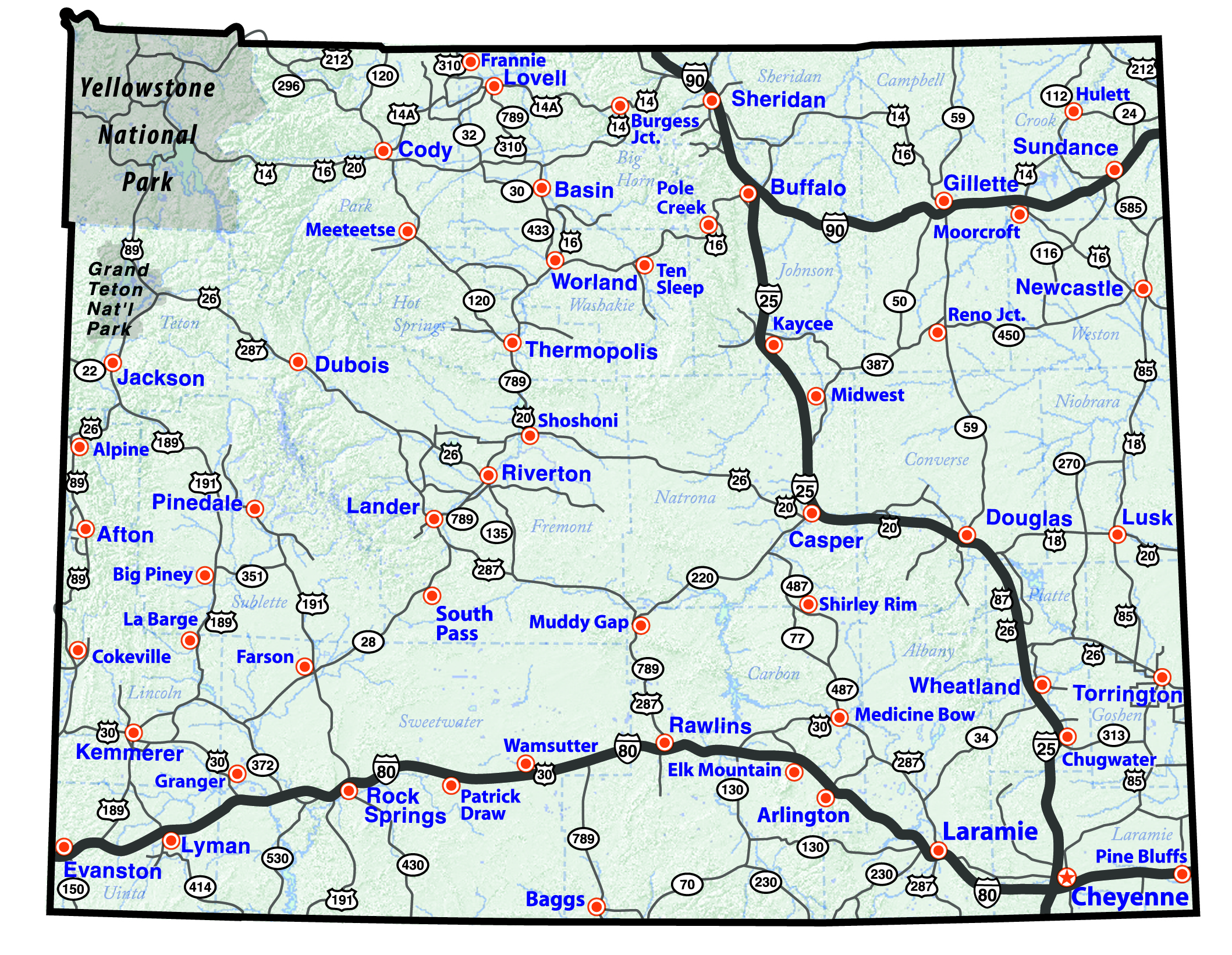
Wyoming Map with Cities, towns, and cities, from its vibrant state capital to its quiet, historic settlements, offers a wealth of experiences that reflect the state’s rich and diverse history. Cody, founded by the legendary Buffalo Bill Cody, serves as a gateway to Yellowstone National Park, drawing visitors with its blend of cowboy culture and outdoor adventures.

Wyoming, often referred to as the “Equality State” due to its progressive history in granting women the right to vote, is a state of wide open spaces, rugged mountains, and diverse landscapes. Known for its iconic national parks, such as Yellowstone and Grand Teton, Wyoming is also home to several cities that embody the state’s spirit of adventure, history, and culture.

  • Exploring a Blank Map of Brazil
  • Printable Blank World Map
  • Blank World Map With Continents
  • Printable Labeled Map of Asia
  • Blank Map of Japan
  • Printable Blank Map of Asia
  • Large World Time Zone Map
  • Printable Interactive World Map
  • Physical Map of Asia
  • Blank Map of The World
  • Political Map of Asia

Wyoming Map with Cities

The Wyoming Map with Cities offers a glimpse into these urban centers, each with its unique character and significance, from thriving cultural hubs to tranquil mountain towns. The state’s cities are not only centers of population but also important drivers of the economy, tourism, and local culture, shaped by Wyoming’s natural resources and its pioneer heritage.

Wyoming Map with Cities

Whether nestled in valleys surrounded by mountain ranges or situated along scenic rivers, Wyoming’s cities offer a gateway to exploring the state’s vast wilderness and rich history. Here’s a look at some of the best-known and most important cities in Wyoming, each contributing to the state’s overall charm.

1. Cheyenne: The city hosts the world-famous Cheyenne Frontier Days, a rodeo and festival that celebrates Wyoming’s cowboy culture every summer. With a population of around 65,000, Cheyenne offers a blend of modern amenities and historic architecture, including the State Capitol and the Union Pacific Railroad Depot.

2. Casper: Casper, centrally located in Wyoming, ranks as the second-largest city and serves as an important regional center. Known as the “Oil City,” Casper’s economy has historically been driven by the oil and gas industry, though it has diversified over the years to include agriculture, manufacturing, and healthcare.

The city, with a population of approximately 60,000, is surrounded by natural beauty, including nearby Casper Mountain, which offers recreational opportunities like hiking, skiing, and snowboarding. Casper also features museums, such as the National Historic Trails Interpretive Center, which explores the history of the Oregon, Mormon, and California Trails.

3. Laramie: Laramie, in southeastern Wyoming, is a vibrant college town of about 32,000 residents, home to the University of Wyoming, where the lively campus atmosphere meets the striking landscapes of plains and mountains. This college town combines the lively spirit of university life with the rugged charm of nearby plains and mountains.

Laramie is known for its historic downtown area, as well as its proximity to natural wonders like Medicine Bow National Forest and the Snowy Range. The city’s history is rooted in the railroad industry and Old West culture, with significant landmarks like the Wyoming Territorial Prison, where Butch Cassidy was once incarcerated.

4. Gillette: The city has a population of around 32,000 and is a hub for the energy industry, though it is also growing as a center for agriculture and tourism. Visitors to Gillette can enjoy the Campbell County Rockpile Museum, which offers exhibits on local history, and the nearby Black Hills, which are known for their outdoor recreation opportunities.

5. Jackson: Nestled in the Teton Mountains in western Wyoming, Map with Cities, Jackson is a resort town famous for its stunning natural beauty, luxurious accommodations, and world-class skiing. With a population of around 10,000, Jackson is a gateway to both Grand Teton National Park and Yellowstone National Park.

The town’s western-style architecture and vibrant arts scene give it a unique charm. Jackson is also known for its wildlife, including bison, elk, and bears, and is a popular destination for outdoor enthusiasts year-round.

6. Rock Springs: It is situated near the Flaming Gorge National Recreation Area, a stunning spot for fishing, boating, and hiking.

7. Evanston: Evanston, in southwestern Wyoming near the Utah border, is a small but vibrant city with a population of around 12,000. It is known for its historic role as a railroad town and has several preserved buildings and landmarks from that era.

Located in the foothills of the Uinta Mountains, Evanston offers ample outdoor activities, including fishing, hiking, and winter sports. The city is also home to the Bear River State Park, a favorite destination for visitors seeking to experience Wyoming’s wildlife and natural beauty.

8. Sheridan: Sheridan, located in the northern part of the state, is known for its proximity to the Bighorn Mountains and its historic downtown area. With a population of around 18,000, Sheridan is a gateway to outdoor adventure, including hiking, fishing, and skiing.

The city has a strong arts and cultural scene, with the Sheridan Arts Council supporting local performances and exhibitions. The city’s history is tied to the railroad, as well as its role in the development of the surrounding ranching and farming communities.

9. Green River: Green River, located in southwestern Wyoming near the Utah border, has a population of around 12,000 and serves as a hub for industries like coal, oil, and natural gas. The city is named after the Green River that runs through it, and it offers residents and visitors access to stunning natural areas like Flaming Gorge and the Red Desert. Green River is also home to several parks and outdoor activities, including fishing, boating, and hiking.

Map of Wyoming Cities and Roads

Nearby, Pinedale invites explorers to the remote Wind River Mountains, a perfect base for anglers, hikers, and history buffs eager to learn about the region’s fur-trading past. Lander, nestled in the heart of Wyoming, is surrounded by breathtaking landscapes, including the Wind River Range, and boasts a lively arts scene alongside a wealth of outdoor activities.

In central Wyoming, Thermopolis offers a relaxing retreat with its famed hot springs and the Wyoming Dinosaur Center, where visitors can step back in time to discover ancient fossils.

Map of Wyoming Cities and Roads

To the south, Rawlins’ historic role in the railroad industry and its proximity to the Medicine Bow National Forest make it a popular stop for travelers and outdoor enthusiasts. Further east, Douglas, a charming town along the Oregon Trail, is steeped in history, with landmarks like the Wyoming Pioneer Memorial Museum telling the story of early settlers.

Wyoming Road Map With Cities

Buffalo, with its Western charm, stands as a gateway to the Bighorn Mountains and a rich history of military and pioneer settlements. Riverton, situated where the Big Wind and Little Wind rivers converge, is an emerging center for agriculture and Native American heritage, featuring the Wind River Heritage Center to honor the area’s history.

Wyoming Road Map With Cities

PDF

Jackson Hole, one of Wyoming Map with Cities premier destinations, attracts visitors from all over the world with its world-class skiing, stunning landscapes, and arts scene, while Sheridan embraces its Old West roots with cultural landmarks and access to outdoor activities in the nearby Bighorn Mountains.

Wheatland, a peaceful town surrounded by farmland, is known for its wheat production and offers a calm respite for outdoor activities like hiking and fishing. Wyoming’s cities, whether they are lively college towns, historic gems, or outdoor hubs, each bring a unique part of the state’s identity, blending the legacy of the Old West with modern-day attractions and natural beauty.

Filed Under: County Map Tagged With: Free Wyoming State Road Map, Map of Wyoming Cities and Roads, Wyoming Map with Cities, Wyoming Map With Cities and Lakes, Wyoming Road Map With Cities

  • « Previous Page
  • 1
  • …
  • 3
  • 4
  • 5
  • 6
  • 7
  • …
  • 14
  • Next Page »

Recent Posts

  • Printable Southeast Asia Map Labeled With Countries [PDF]
  • Explore Missouri County Map – Interactive Complete Guide
  • Free Printable France Map Outline and Labeled [PDF]
  • Explore Map of Montana with Cities: Interactive State Map
  • Free Printable World Map With Equator and Tropics [PDF]

Categories

  • Blank World Map
  • County Map
  • France Map Outline
  • Outline Map
  • Rivers Map
  • Switzerland Map Outline

Copyright © 2026